As smoke from the Sandy Fire continues affecting Southern California communities like Simi Valley, Moorpark, Thousand Oaks, Agoura Hills, Westlake Village, and the San Fernando Valley, many homeowners are asking the same question: should you run your HVAC system during wildfire smoke conditions?
The answer is yes — but only if your HVAC system is configured correctly and properly maintained. During Sandy Fire smoke conditions, running your HVAC system incorrectly may pull harmful smoke particles into your home and worsen indoor air quality. However, using the proper HVAC settings, recirculation mode, high-quality filters, and indoor air quality strategies may help reduce smoke exposure indoors and better protect your family during wildfire season.
Quick Answer
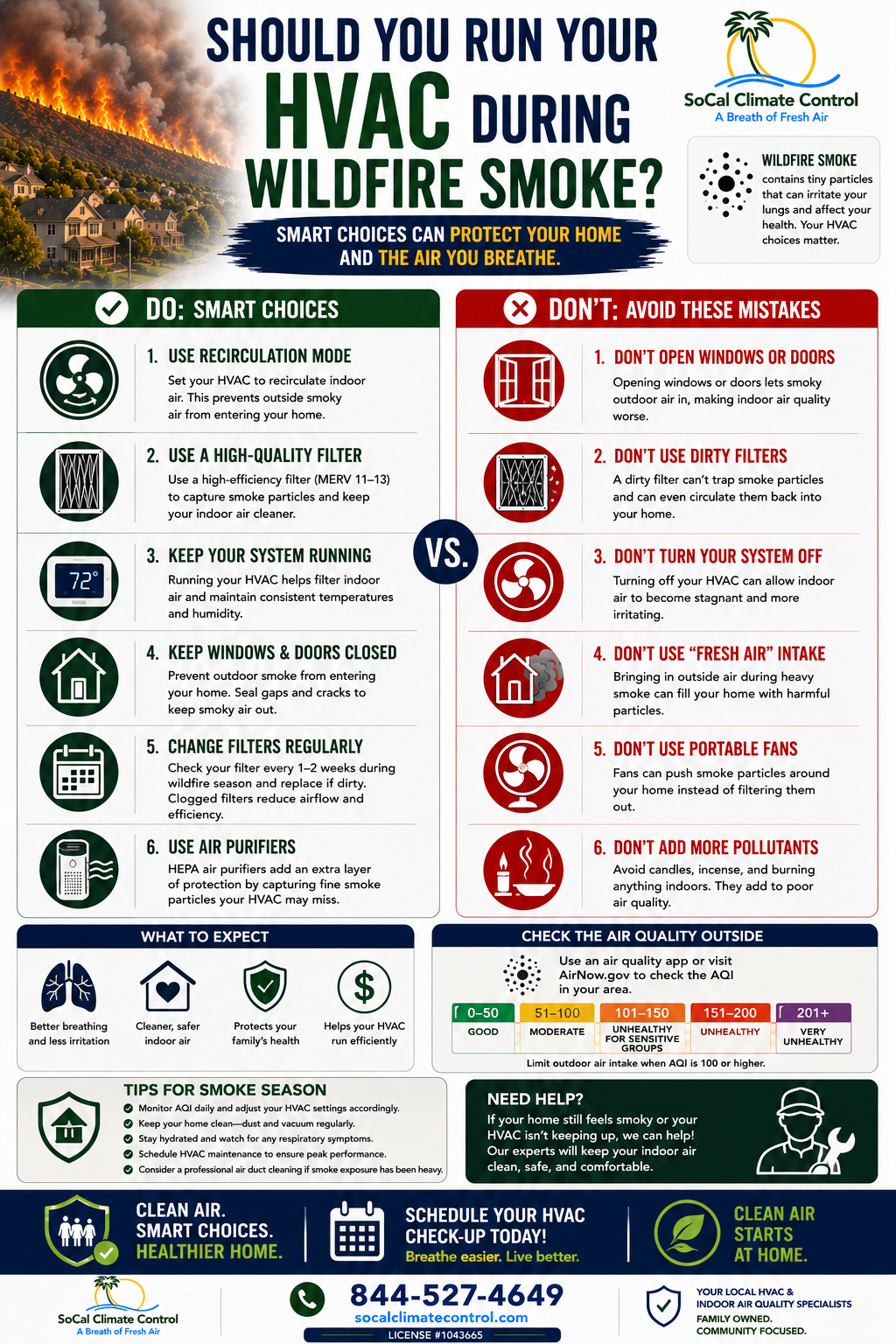
Yes, you should usually run your HVAC system during wildfire smoke — but you should use recirculation mode, keep windows and doors closed, and use a clean high-quality HVAC filter such as MERV 11 or MERV 13 if your system supports it. Proper filtration and indoor air management can help reduce smoke particles inside your home.
Why Wildfire Smoke Is Dangerous Indoors
Many homeowners assume wildfire smoke only affects outdoor air quality. In reality, smoke particles can easily enter homes through small gaps around windows, doors, vents, attics, and HVAC systems.
Wildfire smoke contains fine particulate matter known as PM2.5. According to the United States Environmental Protection Agency (EPA), PM2.5 particles are small enough to enter deep into the lungs and may worsen respiratory conditions, allergies, asthma symptoms, and indoor air quality concerns.
Smoke exposure indoors may lead to:
- Persistent smoke odors
- Eye and throat irritation
- Headaches
- Difficulty breathing
- Worsened asthma symptoms
- Reduced HVAC efficiency
- Dust and soot buildup
This is why proper HVAC operation during wildfire season is so important.
Should You Turn Off Your HVAC During Wildfire Smoke?
In most cases, completely shutting off your HVAC system during wildfire smoke is not recommended.
Your HVAC system helps circulate and filter indoor air. If your system has a clean filter and is operating in recirculation mode, it can help reduce indoor smoke particles and maintain more stable indoor air conditions.
Turning your HVAC system off entirely may cause:
- Stagnant indoor air
- Increased humidity
- Poor airflow
- Higher indoor temperatures
- Smoke particles settling indoors
However, the key is operating your HVAC system properly during smoke events.
Use Recirculation Mode During Wildfire Smoke
One of the most important steps during wildfire smoke conditions is setting your HVAC system to recirculation mode.
Recirculation mode helps keep your system from continuously pulling smoky outdoor air into your home.
Instead, the system repeatedly filters and circulates the indoor air already inside your home.
Benefits of recirculation mode include:
- Reduced smoke intrusion
- Better indoor air filtration
- Improved indoor comfort
- Cleaner indoor air
- Lower exposure to outdoor smoke particles
Many newer HVAC systems have automatic settings that can help manage indoor air circulation more efficiently during smoke events.
The Importance of HVAC Filters During Wildfire Season
Your HVAC filter becomes one of the most important components of your home during wildfire smoke events.
HVAC filters help capture airborne smoke particles before they continue circulating throughout your home.
What MERV Filter Is Best?
MERV stands for Minimum Efficiency Reporting Value. The higher the MERV rating, the smaller the particles the filter can capture.
During wildfire season:
- MERV 8 = Basic filtration
- MERV 11 = Strong balance for most homes
- MERV 13 = Higher smoke particle filtration
According to recommendations from air quality experts and public health agencies, higher-efficiency filters may help reduce smoke particles indoors when properly used.
However, not every HVAC system can safely support high-MERV filters. Using a filter that is too restrictive may reduce airflow and strain the system.
A professional HVAC inspection can help determine which filter is appropriate for your system.
How Often Should You Change HVAC Filters During Wildfire Smoke?
During wildfire smoke events, filters may clog much faster than normal.
Signs your filter may need replacement include:
- Black discoloration
- Heavy dust buildup
- Reduced airflow
- Persistent smoke odors
- Increased dust around vents
Many homeowners may need to inspect filters every few weeks during heavy smoke conditions.
Should You Open Windows During Wildfire Smoke?
During periods of poor air quality, opening windows is generally not recommended.
According to AirNow.gov, homeowners should limit outdoor air entry when air quality levels become unhealthy.
Keeping windows and doors closed helps reduce smoke intrusion indoors.
You should also:
- Seal gaps around windows and doors
- Avoid using whole-house fans
- Limit outdoor ventilation during heavy smoke
- Monitor AQI conditions regularly
Can Wildfire Smoke Stay Inside Air Ducts?
Yes. Smoke particles, soot, dust, and odors may accumulate inside HVAC ductwork.
Over time, contaminated ductwork may continue recirculating particles and odors throughout the home.
Signs smoke may be trapped in your duct system include:
- Persistent smoke smell from vents
- Dust blowing from vents
- Reduced airflow
- Dirty return vents
- HVAC filters clogging unusually fast
Professional duct inspection and cleaning may help improve indoor air quality after significant smoke exposure.
Learn more about professional air duct cleaning services for wildfire smoke and indoor air quality concerns.
Should You Use Portable Air Purifiers?
Portable HEPA air purifiers may provide additional indoor air quality support during wildfire season.
HEPA filters are designed to capture very fine airborne particles, including many smoke particles.
Air purifiers are especially helpful for:
- Bedrooms
- Children’s rooms
- Homes with asthma sufferers
- Homes with pets
- People sensitive to smoke exposure
Create a Clean Air Room During Wildfire Smoke
Public health agencies often recommend creating a “clean air room” during severe smoke events.
A clean air room is an interior room designed to reduce smoke exposure indoors.
Tips for Creating a Clean Air Room
- Choose an interior room with few windows
- Keep windows and doors closed
- Use a HEPA air purifier
- Limit indoor pollutants
- Use recirculation mode on your HVAC system
This may help improve comfort and reduce exposure during periods of poor air quality.
Signs Your HVAC System Needs Inspection After Wildfire Smoke
Wildfire smoke can affect HVAC systems in multiple ways.
Consider scheduling an HVAC inspection if you notice:
- Persistent smoke odors indoors
- Weak airflow
- Dust near vents
- Increased allergy symptoms
- HVAC system cycling more often
- Black or heavily clogged filters
- Reduced cooling or heating performance
Early inspection may help identify airflow restrictions, dirty coils, contaminated ducts, or filtration issues before they worsen.
Indoor Air Quality Matters During Wildfire Season
Wildfire smoke can affect homes long after the visible smoke outside disappears.
Smoke particles may linger inside:
- HVAC systems
- Air ducts
- Filters
- Furniture
- Carpet
- Attic insulation
- Soft fabrics
Maintaining clean indoor air is especially important for:
- Children
- Seniors
- People with asthma
- People with respiratory conditions
- Pets
Professional HVAC & Indoor Air Quality Services
During wildfire season, professional HVAC maintenance and indoor air quality support can help reduce smoke-related issues and improve comfort indoors.
Professional services may include:
- HVAC inspection
- Filter evaluation
- Airflow testing
- Duct inspection
- Indoor air quality assessment
- Air duct cleaning
- HVAC maintenance
Conclusion
So, should you run your HVAC during wildfire smoke?
In most situations, yes — but only when your HVAC system is properly configured and maintained.
Using recirculation mode, replacing filters regularly, monitoring indoor air quality, and keeping your HVAC system clean can help reduce smoke exposure and improve indoor comfort during wildfire season.
Wildfire smoke can impact indoor air quality across Southern California communities including Simi Valley, Moorpark, Thousand Oaks, Agoura Hills, Westlake Village, and the San Fernando Valley.
If your home smells smoky, your airflow feels weak, or your HVAC system may have been affected by wildfire smoke, professional inspection and indoor air quality support may help restore cleaner air inside your home.
Contact SoCal Climate Control
Need help with indoor air quality, wildfire smoke concerns, HVAC inspection, or duct cleaning?
SoCal Climate Control provides professional HVAC and indoor air quality services for homeowners throughout Southern California.
📞 Phone: 844-527-4649
🌐 Website: socalclimatecontrol.com
📍 Google Business Profile: SoCal Climate Control
🛠️ License: #1043665
Schedule your HVAC inspection today and help protect your home’s indoor air during wildfire season.
“`
Savings

Leave Us A Review


