Quick Answer (AEO)
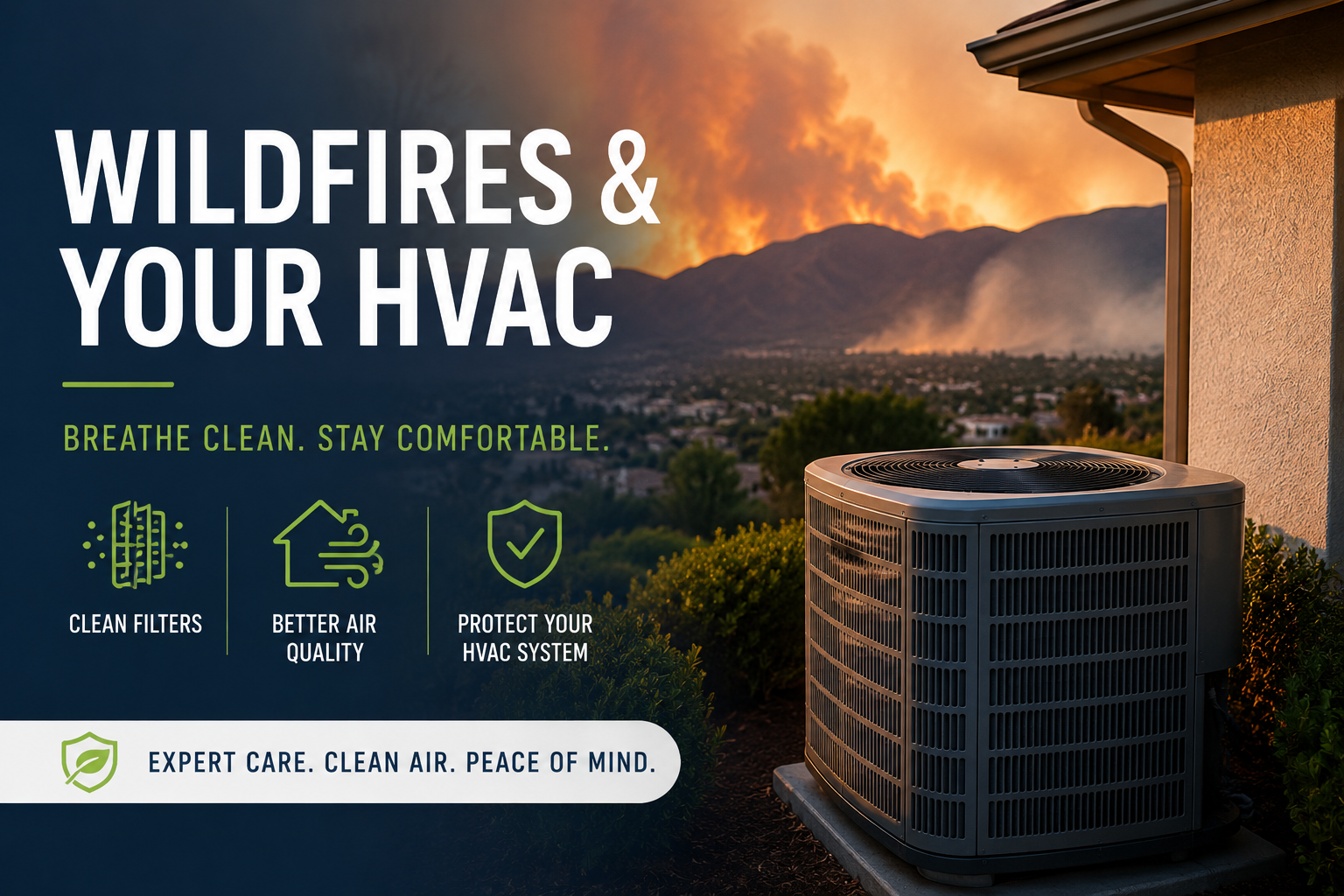
Wildfire smoke can significantly impact your HVAC system by clogging filters, coating evaporator coils, reducing airflow, and introducing fine particulate matter into your home’s indoor air. After nearby wildfire activity, Southern California homeowners should inspect or replace HVAC filters, consider a professional system inspection, and evaluate indoor air quality improvements before continuing normal HVAC operation.
Introduction
Southern California residents are no strangers to wildfire season.
Recent findings from the Los Angeles County Fire Department concluded that Southern California Edison equipment caused the 2025 Eaton Fire, a devastating wildfire that destroyed thousands of structures and highlighted how quickly fires can threaten homes and communities. At the same time, CAL FIRE continues to monitor active incidents throughout California, reminding homeowners that wildfire risk remains a year-round concern.
While many homeowners focus on protecting their property from flames, an often-overlooked issue is what wildfire smoke does to the heating and cooling system that circulates air throughout the home.
Even homes miles away from an active wildfire may experience reduced indoor air quality, clogged HVAC filters, increased equipment wear, and lingering smoke odors.
How Wildfire Smoke Enters Your HVAC System
Smoke particles are incredibly small.
Many are less than 2.5 microns (PM2.5), allowing them to pass through lower-efficiency air filters and circulate throughout your home.
Your HVAC system may pull in:
- Smoke particles
- Ash
- Soot
- Fine dust
- Airborne contaminants
- Burned vegetation particles
These contaminants can settle inside:
- Air filters
- Return ducts
- Supply ducts
- Evaporator coils
- Blower motors
- Registers
Can Your HVAC System Be Damaged by Wildfire Smoke?
Yes.
While smoke may not immediately “break” an air conditioner or heat pump, prolonged exposure can reduce efficiency and increase wear.
Potential issues include:
- Restricted airflow
- Dirty evaporator coils
- Higher operating temperatures
- Longer run times
- Increased utility bills
- Premature component wear
- Reduced indoor comfort
If ash enters outdoor equipment, condenser coils may also require professional cleaning.
Signs Your HVAC System Needs Attention After a Wildfire
Watch for:
- Smoke odor whenever the AC runs
- Reduced airflow
- Excessive dust inside the home
- Higher-than-normal electric bills
- Dirty air filters after only a few days
- Allergy symptoms indoors
- Asthma flare-ups
- Uneven cooling
Should You Replace Your HVAC Filter After Wildfire Smoke?
In most cases, yes.
Even if your filter was recently installed, wildfire smoke can dramatically shorten its lifespan.
Homeowners should:
- Inspect the filter immediately after nearby wildfire events
- Replace heavily discolored filters
- Consider higher-efficiency MERV-rated filters if compatible with the system
- Follow manufacturer recommendations
A professional HVAC technician can determine whether your system can safely use a higher-efficiency filter without restricting airflow.
Should You Have Your Air Ducts Cleaned?
Not every home requires duct cleaning.
However, duct inspection may be appropriate if:
- Ash entered the home
- Smoke odors persist for weeks
- Construction debris mixed with wildfire particles
- There is visible soot around vents
- The home experienced significant smoke infiltration
A qualified inspection can determine whether cleaning is necessary.
Indoor Air Quality Matters More Than Ever
Wildfire smoke doesn’t just affect comfort.
Poor indoor air quality may contribute to:
- Eye irritation
- Respiratory irritation
- Asthma symptoms
- Allergy flare-ups
- Persistent smoke odors
Depending on your home’s needs, indoor air quality upgrades may include:
- Whole-home air purification
- High-efficiency filtration
- UV air treatment
- Proper ventilation strategies
What About Homes Near the Eaton Fire or Other Recent Southern California Fires?
Communities affected by recent fires—including areas near Altadena, Pasadena, Pacific Palisades, and other Southern California neighborhoods—may experience lingering smoke particles long after visible smoke has disappeared.
Even homeowners whose properties were not damaged should consider having their HVAC systems evaluated if they experienced extended periods of smoke exposure. Recent investigations into the Eaton Fire underscore how quickly wildfire conditions can affect surrounding communities, while CAL FIRE continues to track active incidents statewide.
Five Steps to Protect Your HVAC System During Wildfire Season
1. Replace Filters More Frequently
Wildfire season often requires more frequent inspections than normal.
2. Keep Outdoor Equipment Clear
Remove ash, leaves, and debris around the condenser unit.
3. Seal Air Leaks
Reducing outside air infiltration helps limit smoke entering the home.
4. Schedule Preventive HVAC Maintenance
Professional inspections can identify smoke-related issues before they become expensive repairs.
5. Consider Indoor Air Quality Upgrades
Whole-home filtration and purification systems can help improve comfort during future wildfire events.
Frequently Asked Questions
Can wildfire smoke damage my air conditioner?
Smoke can reduce efficiency, clog filters, and increase wear on HVAC components if left unaddressed.
Should I run my HVAC during a wildfire?
It depends on local air quality conditions and emergency guidance. Many homeowners benefit from minimizing outdoor air infiltration and ensuring filters are clean. Follow local public health recommendations during active smoke events.
How often should I replace my filter after wildfire smoke?
Inspect it immediately after significant smoke exposure. Heavy smoke may require replacement much sooner than your normal schedule.
Will an air purifier help?
Whole-home air purification systems and compatible high-efficiency filtration may help reduce airborne particles and improve indoor air quality.
Can smoke stay inside ductwork?
It can, particularly if smoke infiltration was significant. A professional inspection can determine whether cleaning is warranted.
Conclusion
Wildfires are becoming an increasingly important reality for Southern California homeowners. While emergency response focuses on protecting lives and property, your HVAC system also deserves attention after smoke exposure.
Replacing filters, scheduling a professional inspection, and improving indoor air quality can help protect both your comfort and your heating and cooling equipment for years to come.
If you’ve recently experienced wildfire smoke near your home, having your HVAC system evaluated can help ensure it’s operating safely, efficiently, and ready for the next Southern California season.
Savings

Leave Us A Review


