Introduction to Time-of-Use Rate
Quick Answer
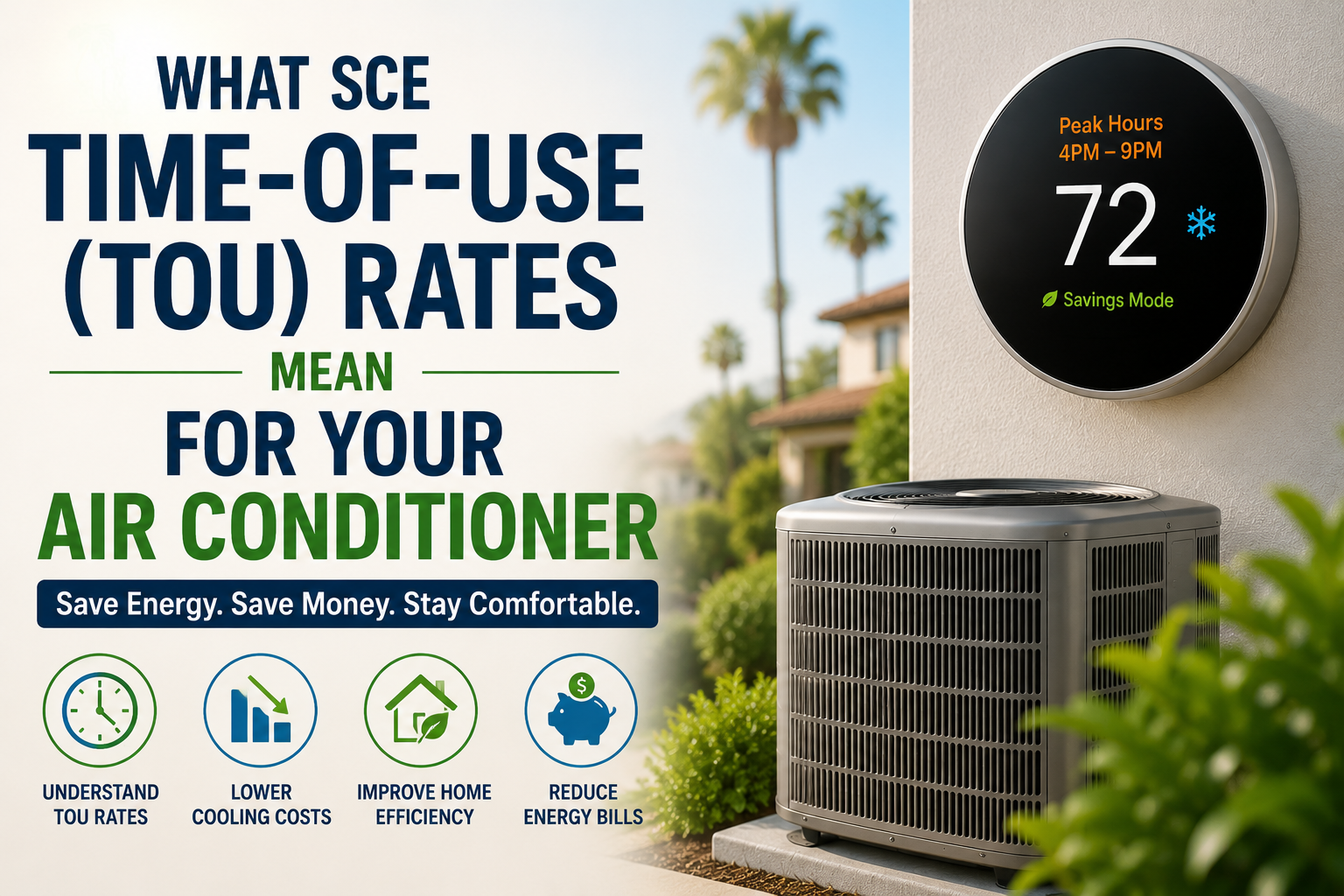
SCE Time-of-Use (TOU) rates charge different electricity prices depending on when you use energy. Running your air conditioner during peak-rate hours can significantly increase your electric bill. Southern California homeowners can reduce cooling costs by understanding TOU schedules, improving HVAC efficiency, using smart thermostats, and pre-cooling their homes before peak pricing periods begin.
Key Takeaways
- SCE Time-of-Use plans charge different rates based on when electricity is consumed.
- Peak-hour cooling can significantly increase your summer electric bill.
- Smart thermostats can help reduce energy usage during expensive periods.
- Pre-cooling your home may help reduce peak-hour AC demand.
- HVAC maintenance and energy-efficient upgrades improve overall savings.
- Understanding TOU rates helps homeowners make smarter cooling decisions.
Many Southern California homeowners are shocked when they open their summer electric bills. Even if your air conditioner usage seems similar to previous years, your monthly costs may still increase significantly.
One major reason is SCE’s Time-of-Use (TOU) rate structure. Understanding how these rates work can help you make smarter decisions about when and how you cool your home.
What Are SCE Time-of-Use (TOU) Rates?
Time-of-Use rates are electricity pricing plans that charge different amounts depending on when energy is consumed. Instead of paying the same price all day, homeowners pay higher rates during periods when demand on the electrical grid is greatest.
In general, electricity becomes more expensive during afternoon and evening hours when air conditioners, appliances, and businesses place greater demand on the grid.
This means two homeowners using the same amount of electricity may receive very different bills depending on when that energy was used.
📍 Local Insight: Northridge
Many Northridge homeowners experience triple-digit summer temperatures. During heat waves, air conditioners often run continuously during peak utility periods, increasing cooling costs.
Why TOU Rates Affect Your Air Conditioner
For most Southern California households, air conditioning is one of the largest contributors to electricity consumption during the summer.
When outdoor temperatures reach their highest levels, homeowners naturally rely on cooling systems more frequently. Unfortunately, these hottest periods often coincide with the most expensive electricity rates.
As a result, your air conditioner may be operating during the exact time electricity costs the most.
Understanding Peak and Off-Peak Hours
While schedules can vary depending on your specific rate plan, TOU pricing generally divides the day into:
- Peak Hours
- Off-Peak Hours
- Super Off-Peak Hours
Electricity used during peak periods costs substantially more than electricity consumed during off-peak periods.
This pricing structure encourages homeowners to shift energy usage away from periods of highest demand.
What Is Pre-Cooling?
Pre-cooling is a strategy where homeowners cool their homes before peak-rate periods begin.
Instead of aggressively cooling your home during the most expensive hours, your air conditioner works earlier in the day when rates may be lower.
By lowering indoor temperatures beforehand, your system may not need to run as heavily during expensive peak periods.
📍 Local Insight: Woodland Hills
Woodland Hills frequently experiences some of the hottest temperatures in Los Angeles County. Strategic cooling techniques can be especially valuable during prolonged summer heat waves.
Can Smart Thermostats Help?
Smart thermostats are one of the most effective tools for homeowners enrolled in TOU rate plans.
These systems can automatically adjust temperatures based on schedules, occupancy patterns, and energy-saving settings.
Many homeowners use smart thermostats to:
- Pre-cool before peak hours
- Reduce runtime during expensive periods
- Improve overall HVAC efficiency
- Monitor energy usage trends
Why HVAC Efficiency Matters
Even if you understand TOU pricing, an inefficient HVAC system can still drive up your electric bill.
Common issues include:
- Dirty air filters
- Leaky ductwork
- Poor airflow
- Low refrigerant levels
- Aging equipment
- Improper system sizing
These problems force your air conditioner to work harder and consume more electricity regardless of the time of day.
Should You Upgrade an Older Air Conditioner?
Many older systems consume significantly more energy than modern high-efficiency equipment.
If your system is more than 15 years old, upgrading may improve comfort while reducing operating costs.
A newer system may also pair more effectively with smart thermostats and energy-saving strategies.
📍 Local Insight: Encino
Many Encino homes feature larger floor plans that require more cooling capacity. Proper zoning, airflow balancing, and thermostat programming can improve comfort while reducing energy waste.
Energy Audits Can Identify Hidden Waste
An HVAC energy audit can help identify inefficiencies that may be increasing your electricity costs.
Audits often evaluate:
- Ductwork performance
- Insulation quality
- Air leakage
- Equipment efficiency
- Thermostat settings
For many homeowners, these hidden issues contribute more to high utility bills than TOU rates alone.
Whole House Fans and Alternative Cooling Strategies
In many Southern California communities, temperatures drop considerably during the evening.
Whole house fans can help remove accumulated heat and reduce dependence on air conditioning after sunset.
This strategy can be particularly useful when combined with TOU rate awareness.
📍 Local Insight: Simi Valley
Many Simi Valley homeowners take advantage of cooler evening temperatures by using whole house fans to reduce overnight cooling costs.
Final Thoughts: Understanding TOU Rates Can Lead to Real Savings
SCE Time-of-Use rates are designed to encourage energy consumption during lower-demand periods. While homeowners cannot control utility pricing, they can control how efficiently their HVAC systems operate.
Combining smart thermostat strategies, HVAC maintenance, energy audits, insulation improvements, and efficient cooling practices can help reduce summer energy costs while maintaining comfort throughout your home.
Sources & References
- Southern California Edison Rate Advisory
- U.S. Department of Energy – Air Conditioning
- ENERGY STAR
- California Energy Commission
Frequently Asked Questions About SCE Time-of-Use Rates and Air Conditioning
What are SCE Time-of-Use (TOU) rates?
Do TOU rates make my electric bill higher?
Why does my air conditioner cost more to operate during peak hours?
What is pre-cooling and how does it work?
Can a smart thermostat help me save money?
Do older air conditioners use more electricity?
Can HVAC maintenance lower my cooling costs?
How do duct leaks affect my electric bill?
Can attic insulation reduce cooling expenses?
What is an HVAC energy audit?
Are whole house fans effective in Southern California?
Which homes are most affected by TOU rates?
What is the best thermostat setting during peak hours?
Can replacing my HVAC system reduce my electric bill?
How can SoCal Climate Control help homeowners save energy?
Ready to Reduce Your Cooling Costs?
Understanding SCE Time-of-Use rates is only part of the equation. The biggest savings often come from improving HVAC efficiency, reducing energy waste, and ensuring your cooling system is operating at peak performance.
Whether you need HVAC maintenance, an energy audit, smart thermostat installation, ductwork improvements, insulation recommendations, or a high-efficiency system upgrade, SoCal Climate Control can help.
Proudly Serving Homeowners Throughout:
Northridge • Woodland Hills • Encino • Chatsworth • Porter Ranch • Granada Hills • Reseda • Winnetka • Tarzana • Sherman Oaks • West Hills • Calabasas • Hidden Hills • Agoura Hills • Westlake Village • Thousand Oaks • Moorpark • Simi Valley • Camarillo • Newbury Park
Schedule an HVAC evaluation today and discover how much energy your home may be wasting.
Related Articles
- How Southern California Homeowners Can Reduce Rising Electricity Bills Without Sacrificing Comfort
- Pre-Cooling Your Home: The HVAC Strategy Utility Companies Want You To Know
- Why Older Air Conditioners Cost More During High Electricity Rate Periods
- Smart Thermostats and Time-of-Use Electricity Plans
- The 7 Biggest Mistakes Increasing Southern California Electric Bills
- Why Your Electric Bill Doubled This Summer
- Best Thermostat Settings to Save Money During California Heat Waves
- Energy Audits: The Fastest Way to Find Hidden Utility Bill Problems
- Whole House Fans vs Air Conditioning: Which Saves More Money?
- Southern California Energy Saving Checklist for Summer
Savings

Leave Us A Review


