Quick Answer
Whole house fans typically use significantly less electricity than central air conditioning and can reduce cooling costs during cooler mornings and evenings. However, they are not a complete replacement for air conditioning during extreme Southern California heat waves. For many homeowners, the most cost-effective strategy is using a whole house fan alongside an efficient air conditioning system.
Key Takeaways
- Whole house fans generally consume much less electricity than central AC systems.
- Southern California’s cooler evening temperatures often make whole house fans highly effective.
- Air conditioning remains necessary during extreme heat waves and high humidity periods.
- Whole house fans can reduce AC runtime and lower electric bills.
- The best solution for many homes is using both systems together.
- Energy audits can determine whether a whole house fan is a good fit for your home.
- Combining proper insulation, smart thermostat settings, and whole house ventilation can maximize savings.
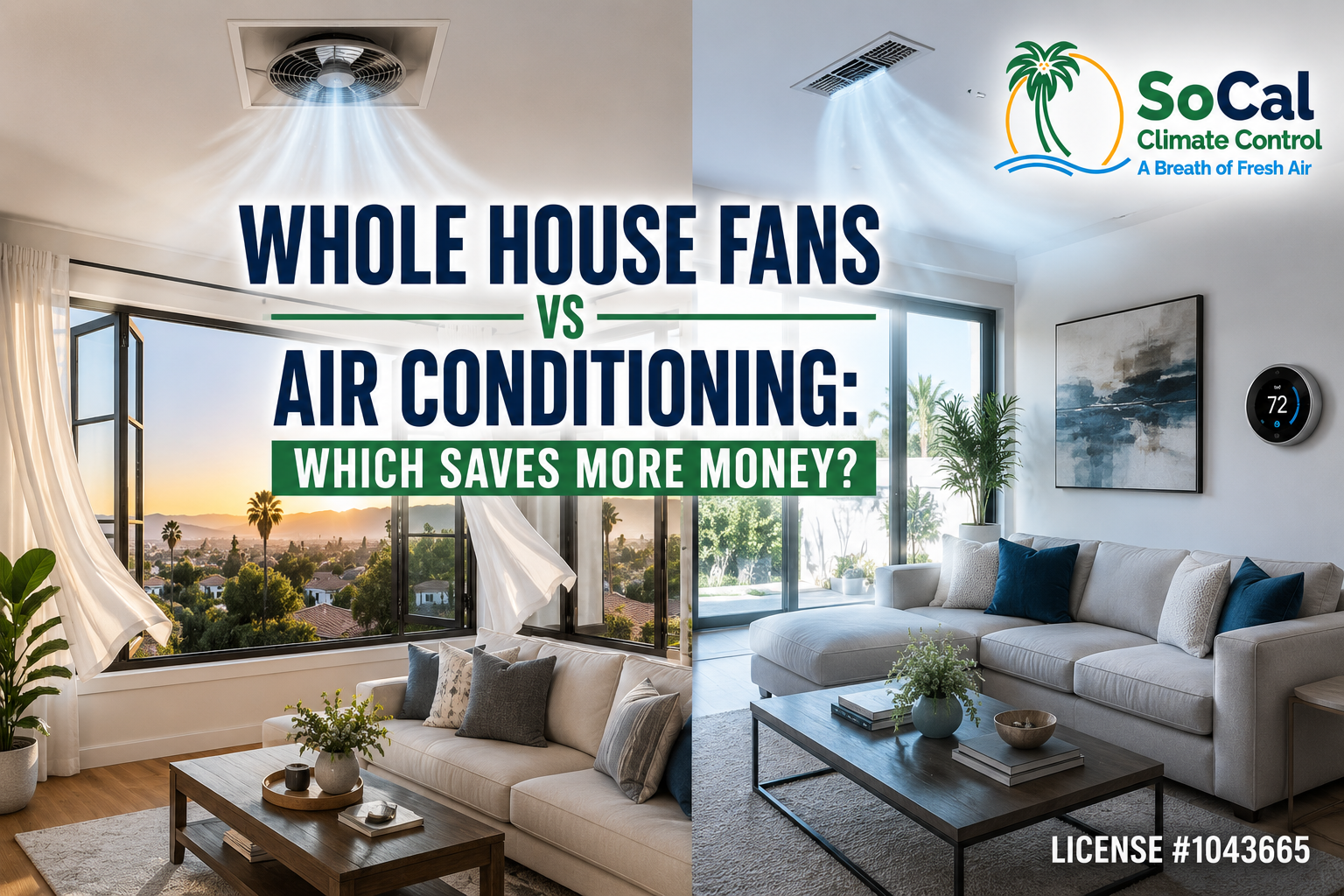
Whole House Fans vs Air Conditioning: Which Saves More Money?
Southern California homeowners are constantly looking for ways to stay comfortable while keeping electricity bills under control.
With utility costs rising and summer temperatures reaching triple digits in many areas, homeowners frequently ask:
“Should I install a whole house fan, or should I continue relying on air conditioning?”
The answer depends on your home’s design, local climate, comfort expectations, and energy-saving goals.
While air conditioning remains the most powerful cooling solution, whole house fans can dramatically reduce cooling costs under the right conditions. Understanding how each system works can help you make an informed decision about which option delivers the best value for your home.
What Is a Whole House Fan?
A whole house fan is a ventilation system installed in the ceiling, typically in a hallway or central area of the home.
The fan pulls cooler outdoor air through open windows and exhausts warmer indoor air through attic vents.
Unlike air conditioning, a whole house fan does not create cold air.
Instead, it:
- Removes trapped indoor heat
- Brings in cooler outside air
- Improves ventilation
- Reduces attic temperatures
- Creates a cooling breeze throughout the home
When outdoor temperatures are lower than indoor temperatures, a whole house fan can provide significant comfort while using relatively little electricity.
How Air Conditioning Works
Air conditioning systems cool indoor air through refrigeration cycles.
Your AC system:
- Removes heat from inside the home
- Transfers heat outdoors
- Controls indoor temperature
- Reduces humidity
- Maintains comfort regardless of outdoor temperature
This cooling capability makes air conditioning essential during Southern California heat waves when outdoor temperatures remain extremely high.
However, cooling an entire home requires substantially more energy than simply moving air.
📍 Local Insight: Northridge
Northridge regularly experiences triple-digit summer temperatures. While air conditioning is often necessary during peak heat, whole house fans can be very effective during cooler mornings and evenings.
Which System Uses Less Electricity?
From a purely energy-consumption standpoint, whole house fans typically use far less electricity.
A whole house fan may use a few hundred watts to operate.
By comparison, a central air conditioning system often requires several thousand watts while cooling.
This means:
- Whole house fans generally cost less to operate.
- Air conditioners consume significantly more energy.
- Using a whole house fan during suitable weather can reduce AC runtime.
- Reduced AC runtime can lower utility bills.
For homeowners focused primarily on energy savings, whole house fans often provide an attractive option.
Do Whole House Fans Work in Southern California?
In many parts of Southern California, yes.
One reason whole house fans perform well in this region is the temperature difference between daytime and nighttime conditions.
Many communities experience:
- Hot afternoons
- Cool evenings
- Lower nighttime temperatures
- Dry summer air
These conditions create ideal opportunities to use a whole house fan.
Instead of running the AC overnight, homeowners can often open windows and use a whole house fan to flush heat from the home.
📍 Local Insight: Woodland Hills
Woodland Hills frequently experiences hot afternoons followed by cooler evenings. Whole house fans can help homeowners reduce overnight air conditioning usage and lower cooling costs.
Can a Whole House Fan Replace Air Conditioning?
For most Southern California homeowners, the answer is no.
While whole house fans can reduce AC usage, they cannot completely replace air conditioning during extreme heat.
Whole house fans depend on outdoor temperatures being cooler than indoor temperatures.
When outdoor temperatures remain in the 90s or 100s, a whole house fan simply brings hot air into the home.
Air conditioning remains the most reliable solution during:
- Heat waves
- Triple-digit temperatures
- Poor air quality events
- Wildfire smoke conditions
- Periods requiring precise indoor temperature control
For these reasons, many homeowners choose a combination approach.
The Best Solution: Using Both Systems Together
Many energy-conscious homeowners discover that combining both systems provides the best balance of comfort and efficiency.
A typical strategy may look like:
- Morning: Use natural ventilation.
- Afternoon: Run air conditioning during peak heat.
- Evening: Switch to a whole house fan as outdoor temperatures drop.
- Night: Continue whole house fan operation to cool the home.
This approach can significantly reduce overall cooling costs while maintaining comfort.
Whole House Fans and Time-of-Use Electricity Rates
Southern California Edison Time-of-Use (TOU) plans often charge higher rates during peak demand periods.
Using a whole house fan during lower-cost periods may help homeowners:
- Reduce peak-hour AC runtime
- Lower electricity consumption
- Take advantage of cooler evening temperatures
- Support pre-cooling strategies
Related reading:
What SCE Time-of-Use (TOU) Rates Mean for Your Air Conditioner
Whole House Fans Can Support Pre-Cooling Strategies
Pre-cooling involves reducing indoor temperatures before peak electricity periods.
Whole house fans can complement this strategy by:
- Removing accumulated heat overnight
- Starting the day with cooler indoor temperatures
- Reducing afternoon cooling demand
- Improving overall HVAC efficiency
Related reading:
Pre-Cooling Your Home: The HVAC Strategy Utility Companies Want You To Know
📍 Local Insight: Simi Valley
Many Simi Valley homeowners use whole house fans to flush out accumulated heat after sunset, helping reduce overnight AC operation.
When Whole House Fans Save the Most Money
Whole house fans often deliver the greatest value when:
- Evening temperatures cool significantly.
- Outdoor air quality is good.
- The home has proper attic ventilation.
- Windows can be opened safely.
- Homeowners are comfortable with natural airflow.
The more frequently outdoor temperatures become cooler than indoor temperatures, the greater the potential savings.
When Air Conditioning Provides Greater Value
Air conditioning becomes more important when:
- Outdoor temperatures remain extremely high.
- Indoor humidity needs control.
- Family members have medical sensitivities.
- Air quality is poor.
- Precise temperature control is desired.
Many homeowners prioritize comfort and consistency over maximum energy savings, making air conditioning an essential component of their cooling strategy.
Do Whole House Fans Improve Indoor Air Quality?
They can.
Whole house fans continuously exchange indoor air with outdoor air.
Benefits may include:
- Reduced stale indoor air
- Improved ventilation
- Reduced odors
- Fresher indoor environment
However, during wildfire events or poor outdoor air quality days, homeowners should keep windows closed and rely on properly filtered HVAC systems instead.
What About Installation Costs?
Installation costs vary depending on:
- Home size
- Electrical requirements
- Attic accessibility
- Ventilation requirements
- Fan model selection
While a whole house fan often costs less than replacing an HVAC system, the decision should focus on long-term value rather than upfront cost alone.
An evaluation can help determine whether a whole house fan fits your home’s cooling needs.
📍 Local Insight: Porter Ranch
Many Porter Ranch homeowners seek ways to reduce cooling costs without sacrificing comfort. Whole house fans can be a valuable addition when integrated into a broader energy-efficiency strategy.
How Energy Audits Help Determine the Best Cooling Strategy
Not every home benefits equally from a whole house fan.
An energy audit can evaluate:
- Current HVAC efficiency
- Attic ventilation
- Insulation performance
- Air leakage
- Comfort challenges
- Potential energy savings
Understanding your home’s overall performance helps ensure that any investment delivers meaningful results.
Related reading:
Energy Audits: The Fastest Way to Find Hidden Utility Bill Problems
Which Saves More Money?
In terms of operating costs alone:
Whole House Fan = Lower Energy Usage
However:
Air Conditioning = Greater Cooling Power and Comfort Control
For many Southern California homeowners, the real winner is not choosing one or the other.
The most effective strategy is often using both systems together:
- Whole house fan during cooler periods.
- Air conditioning during peak heat.
- Smart thermostat scheduling.
- Proper insulation and airflow improvements.
This balanced approach can maximize comfort while minimizing utility costs.
Ready to Explore Cooling Options for Your Home?
Whether you’re considering a whole house fan, improving HVAC efficiency, or looking for ways to reduce rising electric bills, SoCal Climate Control can help evaluate your home’s cooling needs.
Our team provides whole house fan installations, energy audits, insulation solutions, smart thermostat support, and HVAC system evaluations designed to improve comfort and energy efficiency throughout Southern California.
Sources & References
Frequently Asked Questions About Whole House Fans and Air Conditioning
What is a whole house fan?
Do whole house fans use less electricity than air conditioning?
Can a whole house fan replace air conditioning?
Do whole house fans work in Southern California?
When should I use a whole house fan?
Can a whole house fan reduce my electric bill?
Are whole house fans noisy?
Do whole house fans improve indoor air quality?
What is the difference between a whole house fan and an attic fan?
Can whole house fans help with Time-of-Use electricity plans?
Do whole house fans work during heat waves?
How do I know if a whole house fan is right for my home?
Ready to Improve Your Home’s Energy Efficiency?
Whole house fans can be an excellent way to reduce cooling costs, but every home is different. The best solution depends on your home’s design, insulation, HVAC system, and comfort goals.
SoCal Climate Control helps homeowners evaluate cooling strategies through whole house fan installations, energy audits, HVAC assessments, insulation improvements, and smart comfort solutions.
Proudly Serving:
Northridge • Woodland Hills • Encino • Chatsworth • Porter Ranch • Granada Hills • Reseda • Winnetka • Tarzana • Sherman Oaks • West Hills • Calabasas • Hidden Hills • Agoura Hills • Westlake Village • Thousand Oaks • Moorpark • Simi Valley
Schedule an evaluation today and discover the most efficient cooling solution for your home.
Related Articles
- How Southern California Homeowners Can Reduce Rising Electricity Bills Without Sacrificing Comfort
- What SCE Time-of-Use (TOU) Rates Mean for Your Air Conditioner
- Pre-Cooling Your Home: The HVAC Strategy Utility Companies Want You To Know
- Why Older Air Conditioners Cost More During High Electricity Rate Periods
- Smart Thermostats and Time-of-Use Electricity Plans
- The 7 Biggest Mistakes Increasing Southern California Electric Bills
- Why Your Electric Bill Doubled This Summer
- Best Thermostat Settings to Save Money During California Heat Waves
- Energy Audits: The Fastest Way to Find Hidden Utility Bill Problems
- Southern California Energy Saving Checklist for Summer
Savings

Leave Us A Review


