Introduction to Pre-Cooling Your Home
Quick Answer
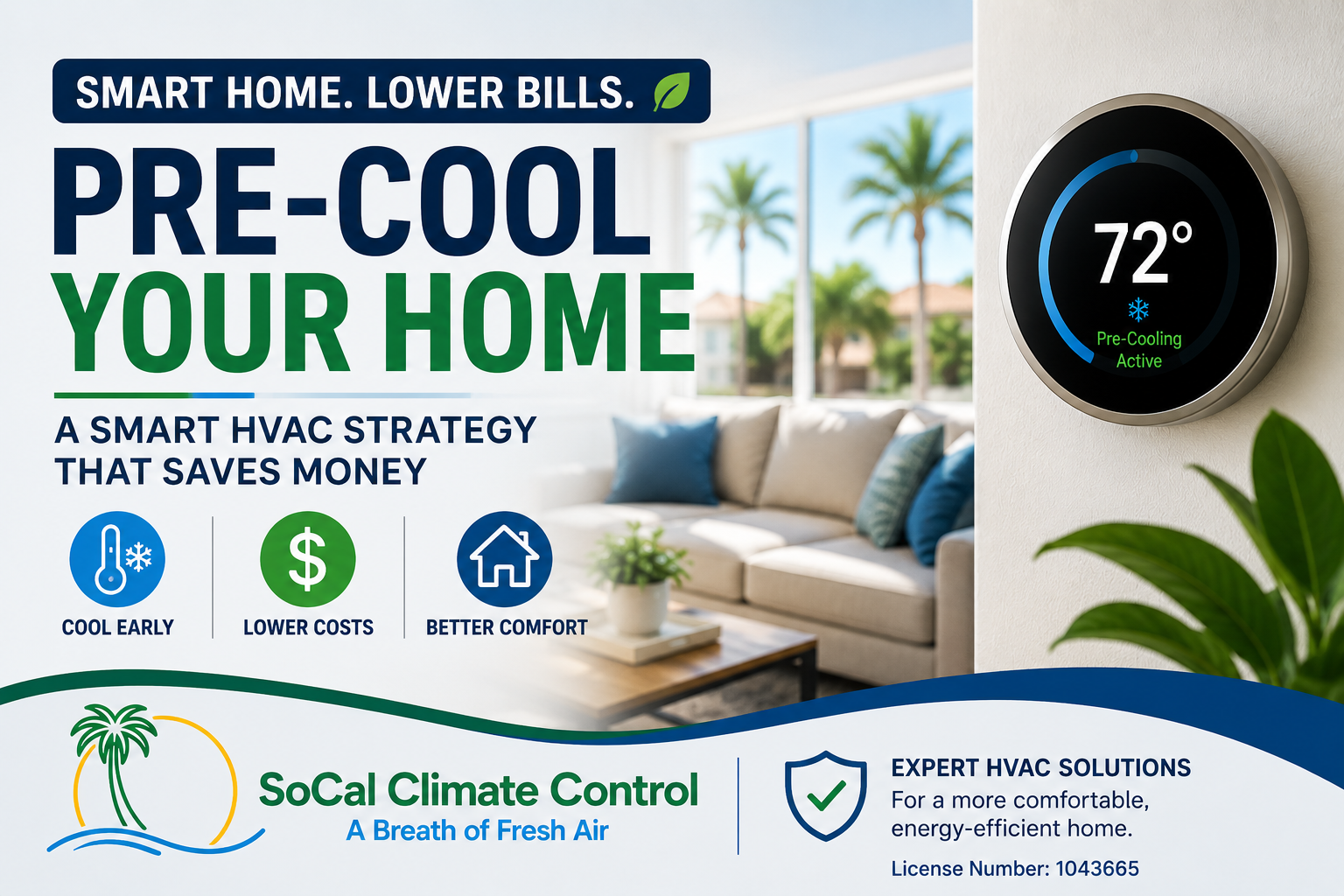
Pre-cooling is an HVAC strategy where you cool your home before the hottest and most expensive energy periods of the day. For Southern California homeowners, especially those on Time-of-Use electricity plans, pre-cooling can help reduce peak-hour air conditioning demand, improve comfort, and lower overall cooling costs when combined with proper HVAC maintenance, insulation, and smart thermostat programming.
Key Takeaways
- Pre-cooling means lowering your indoor temperature before peak-rate or high-heat periods begin.
- This strategy can help reduce heavy AC usage during expensive afternoon and evening hours.
- Smart thermostats make pre-cooling easier by automating temperature schedules.
- Pre-cooling works best in homes with good insulation, sealed ducts, and properly maintained HVAC systems.
- Southern California homes in hot inland areas may benefit most from pre-cooling strategies.
- Pre-cooling should be balanced carefully so your system does not overwork unnecessarily.
Pre-Cooling Your Home: The HVAC Strategy Utility Companies Want You To Know
If your Southern California electric bill rises sharply during the summer, your air conditioner may be running hardest at the most expensive time of day. That is where pre-cooling can help.
Pre-cooling is a simple HVAC strategy that involves cooling your home earlier in the day before outdoor temperatures reach their highest levels and before peak electricity pricing periods begin. Instead of waiting until your home becomes hot and uncomfortable, you use your air conditioner more strategically to stay ahead of the heat.
For homeowners in Northridge, Woodland Hills, Porter Ranch, Encino, Simi Valley, Thousand Oaks, and surrounding Southern California communities, pre-cooling can be especially useful during long summer heat waves.
What Is Pre-Cooling?
Pre-cooling means lowering the temperature inside your home before the hottest part of the day. The goal is to cool the structure, indoor air, walls, flooring, and furnishings before outdoor heat builds up.
Once your home is cooler, it may remain comfortable longer during peak afternoon and evening hours. This can reduce how often your air conditioner needs to run when electricity demand is higher.
Think of your home as a thermal container. When the house is already hot, your AC has to work harder to bring the temperature down. When the house is pre-cooled, your system may only need to maintain comfort instead of fighting a major temperature buildup.
📍 Local Insight: Northridge
Northridge homes often experience intense afternoon heat during the summer. Pre-cooling before the hottest part of the day can help reduce the strain on older air conditioning systems.
Why Pre-Cooling Matters for Southern California Homeowners
Southern California homeowners face a combination of challenges during summer:
- Longer cooling seasons
- Higher afternoon temperatures
- Heat waves that last several days
- Rising electricity costs
- Time-of-Use electricity pricing
- Older homes with insufficient insulation
- Aging HVAC systems
When these factors overlap, your air conditioner may run for long periods during the most expensive and stressful hours of the day.
Pre-cooling gives homeowners a way to shift some of that cooling demand earlier, when outdoor temperatures may be lower and utility rates may be less expensive depending on the rate plan.
How Pre-Cooling Works With Time-of-Use Rates
Many Southern California homeowners are on Time-of-Use electricity plans. Under these plans, electricity may cost more during peak demand hours and less during off-peak periods.
Because air conditioning is often one of the largest summer energy users in the home, cooling during peak-rate periods can make a noticeable difference in your monthly utility bill.
Pre-cooling may help by shifting more of your AC usage to earlier parts of the day. For example, instead of waiting until late afternoon to cool a warm house, a homeowner may set the thermostat lower before peak hours begin and then allow the temperature to rise slightly during the most expensive period.
This does not mean turning your home into an icebox. The goal is controlled, strategic cooling.
For a deeper explanation of how utility pricing affects your air conditioner, read:
What SCE Time-of-Use Rates Mean for Your Air Conditioner.
What Is the Best Time to Pre-Cool Your Home?
The best time to pre-cool depends on your utility rate plan, outdoor temperature, insulation, home layout, and comfort preferences.
In general, many homeowners begin pre-cooling in the late morning or early afternoon before the hottest part of the day. The goal is to reduce indoor heat before the home becomes uncomfortable.
A sample strategy may look like this:
- Cool the home slightly earlier in the day.
- Reduce AC usage during peak-rate periods.
- Allow the indoor temperature to rise modestly while maintaining comfort.
- Resume normal cooling later when temperatures and rates drop.
The exact schedule should be customized for your home. A poorly insulated home may warm up quickly, while a well-insulated home may hold cooler air longer.
📍 Local Insight: Woodland Hills
Woodland Hills is known for extreme summer heat. Homes in this area may benefit from pre-cooling earlier in the day because outdoor temperatures can climb quickly by mid-afternoon.
Can Smart Thermostats Automate Pre-Cooling?
Yes. Smart thermostats are one of the easiest ways to manage pre-cooling.
Instead of manually adjusting the thermostat throughout the day, smart thermostats can create automated schedules based on your lifestyle, occupancy, and utility rate periods.
A smart thermostat can help:
- Start cooling before peak-rate periods
- Raise the temperature slightly during expensive hours
- Reduce cooling when the home is unoccupied
- Track usage patterns
- Improve comfort consistency
Smart thermostat programming can be especially helpful for families who are away during the day or homeowners who want better control without constantly adjusting settings.
To learn more, read:
Smart Thermostats and Time-of-Use Electricity Plans.
Does Pre-Cooling Save Money?
Pre-cooling can help reduce energy costs, but the savings depend on several factors.
Pre-cooling tends to work best when:
- Your utility plan charges more during peak hours
- Your home holds cool air well
- Your ductwork is sealed and efficient
- Your HVAC system is properly maintained
- Your thermostat schedule is optimized
However, pre-cooling may not save money if your air conditioner runs excessively earlier in the day or if your home quickly loses cooled air due to poor insulation or air leaks.
That is why pre-cooling should be part of a larger HVAC efficiency strategy rather than a stand-alone solution.
When Pre-Cooling Does Not Work Well
Pre-cooling is not ideal for every home.
It may be less effective if:
- Your attic insulation is poor
- Your ducts leak cooled air
- Your HVAC system is oversized or undersized
- Your home has large west-facing windows
- Your thermostat is poorly programmed
- Your AC system is old and inefficient
In these cases, the air conditioner may work hard to pre-cool the home, only for that cool air to be lost quickly.
Before relying heavily on pre-cooling, homeowners should make sure their HVAC system and home envelope are operating efficiently.
📍 Local Insight: Porter Ranch
Porter Ranch homes can experience strong sun exposure and elevated cooling demand. Pre-cooling works best when paired with good insulation, sealed ductwork, and proper airflow balancing.
How HVAC Maintenance Improves Pre-Cooling
A well-maintained HVAC system is essential for effective pre-cooling.
If your system has dirty coils, clogged filters, low refrigerant, poor airflow, or worn components, it may require more energy to cool your home earlier in the day.
Routine maintenance helps your system:
- Cool more efficiently
- Maintain better airflow
- Reduce unnecessary strain
- Operate more reliably during heat waves
- Use less energy to achieve the same comfort level
Pre-cooling with a neglected AC system may increase runtime without delivering meaningful savings. Maintenance helps make the strategy more effective.
Insulation and Ductwork Matter
Pre-cooling is only as effective as your home’s ability to hold cooled air.
If attic insulation is inadequate, heat can enter the home quickly. If ductwork leaks, cooled air can escape before it reaches your living spaces.
Common issues that reduce pre-cooling performance include:
- Leaky ducts in hot attic spaces
- Thin or damaged insulation
- Air leaks around doors and windows
- Poor attic ventilation
- Unbalanced airflow
An energy audit can identify these issues and help homeowners understand why cooling costs remain high despite thermostat adjustments.
For more energy-saving guidance, read:
Energy Audits: The Fastest Way to Find Hidden Utility Bill Problems.
Pre-Cooling During a Heat Wave
During a Southern California heat wave, your home may absorb heat faster than usual. Pre-cooling can help, but homeowners should use realistic expectations.
If temperatures remain extremely high for several days, the structure of the home may stay warm even overnight. In these conditions, your AC may still need to run frequently to maintain comfort.
The goal is not to eliminate AC usage. The goal is to reduce the most expensive and inefficient cooling demand whenever possible.
📍 Local Insight: Simi Valley
Simi Valley homeowners may benefit from combining pre-cooling with evening ventilation or whole house fans when nighttime temperatures drop after sunset.
Should You Pre-Cool Every Day?
Not necessarily. Pre-cooling is most useful on hot days, during heat waves, or when your utility pricing makes peak-hour cooling more expensive.
On mild days, aggressive pre-cooling may not be necessary. A smart thermostat can help adjust cooling based on outdoor conditions and household routines.
Homeowners should monitor comfort and energy usage to determine what works best.
Pre-Cooling vs. Running the AC All Day
Pre-cooling is not the same as running the air conditioner nonstop.
Running the AC all day can waste energy, especially when the home is unoccupied or when thermostat settings are too low.
Pre-cooling is intentional. It uses a controlled schedule to cool the home before high-cost periods and then reduces demand during peak times.
The difference is strategy.
Ready to Lower Your Cooling Costs Without Sacrificing Comfort?
Pre-cooling can be a smart strategy for Southern California homeowners, but it works best when your entire HVAC system is performing efficiently.
If your system is old, your ducts leak, your insulation is poor, or your thermostat settings are not optimized, pre-cooling may not deliver the results you expect.
SoCal Climate Control can help evaluate your home comfort system and recommend practical ways to reduce cooling costs, improve comfort, and prepare your home for Southern California heat.
Sources & References
Frequently Asked Questions About Pre-Cooling Your Home
What does pre-cooling your home mean?
Can pre-cooling lower my electric bill?
When is the best time to pre-cool a house?
Does pre-cooling work with SCE Time-of-Use rates?
Can a smart thermostat automate pre-cooling?
Is pre-cooling better than running the AC all day?
Does pre-cooling work during a heat wave?
Why does insulation matter for pre-cooling?
Can leaky ducts make pre-cooling less effective?
Should every Southern California homeowner use pre-cooling?
Can pre-cooling reduce strain on my HVAC system?
How can SoCal Climate Control help with pre-cooling strategies?
Ready to Make Your Cooling Strategy More Efficient?
Pre-cooling can help Southern California homeowners reduce peak-hour AC demand, but it works best when your HVAC system, ductwork, insulation, and thermostat are properly optimized.
SoCal Climate Control can help you identify where your home may be wasting energy and recommend practical solutions to improve comfort, reduce cooling costs, and prepare your home for hot Southern California weather.
Proudly Serving Homeowners Throughout:
Northridge • Woodland Hills • Encino • Chatsworth • Porter Ranch • Granada Hills • Reseda • Winnetka • Tarzana • Sherman Oaks • West Hills • Calabasas • Hidden Hills • Agoura Hills • Westlake Village • Thousand Oaks • Moorpark • Simi Valley • Camarillo • Newbury Park
Schedule your HVAC evaluation today and discover smarter ways to keep your home cool.
Related Articles
- How Southern California Homeowners Can Reduce Rising Electricity Bills Without Sacrificing Comfort
- What SCE Time-of-Use (TOU) Rates Mean for Your Air Conditioner
- Why Older Air Conditioners Cost More During High Electricity Rate Periods
- Smart Thermostats and Time-of-Use Electricity Plans
- The 7 Biggest Mistakes Increasing Southern California Electric Bills
- Why Your Electric Bill Doubled This Summer
- Best Thermostat Settings to Save Money During California Heat Waves
- Energy Audits: The Fastest Way to Find Hidden Utility Bill Problems
- Whole House Fans vs Air Conditioning: Which Saves More Money?
- Southern California Energy Saving Checklist for Summer
Savings

Leave Us A Review


