Quick Answer
A professional energy audit is one of the fastest ways to identify hidden causes of high electric bills. Energy audits evaluate your HVAC system, insulation, ductwork, air leaks, windows, and overall home efficiency to uncover where energy is being wasted. Many Southern California homeowners discover that problems such as leaky ducts, poor insulation, and aging HVAC equipment are costing them hundreds of dollars each year.
Key Takeaways
- Energy audits identify hidden sources of energy loss throughout your home.
- HVAC systems are often responsible for a significant portion of household energy usage.
- Leaky ductwork can waste 20% to 30% of conditioned air.
- Insulation deficiencies often cause excessive cooling costs.
- Air leaks around doors, windows, and attics can dramatically increase utility bills.
- Energy audits provide a roadmap for improving comfort and efficiency.
- Many homeowners see measurable reductions in utility costs after implementing recommendations.
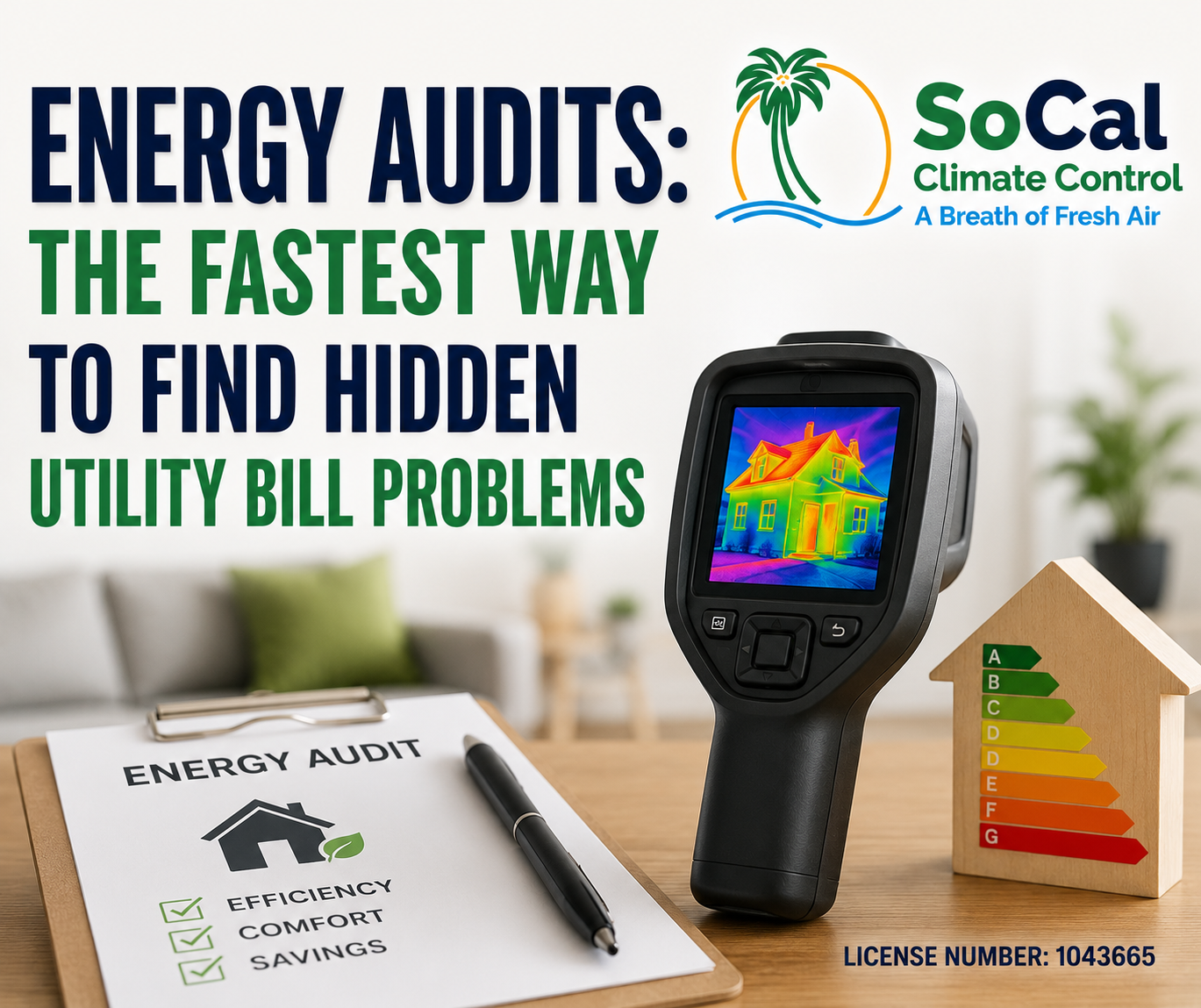
Energy Audits: The Fastest Way to Find Hidden Utility Bill Problems
Have you opened your electric bill lately and wondered:
“Why is my bill so high?”
You’re not alone.
Across Southern California, homeowners are experiencing rising utility costs, especially during the summer cooling season. While utility rates often receive the blame, many homes have hidden inefficiencies that quietly drive energy usage higher month after month.
The challenge is that these problems are often invisible.
Your air conditioner may appear to be working properly. Your thermostat may seem accurate. Yet somewhere inside your home, energy could be escaping every single day.
That’s where an energy audit becomes incredibly valuable.
An energy audit helps identify hidden inefficiencies, energy losses, and HVAC performance issues so homeowners can make informed decisions about improving comfort and reducing utility costs.
What Is an Energy Audit?
An energy audit is a comprehensive evaluation of your home’s energy performance.
Rather than guessing why utility bills are increasing, an energy audit systematically examines the components that affect heating and cooling efficiency.
Areas commonly evaluated include:
- HVAC equipment performance
- Ductwork condition
- Insulation levels
- Air leakage
- Window performance
- Attic conditions
- Thermostat settings
- Ventilation issues
- Indoor comfort concerns
The goal is simple:
Find where energy is being wasted and identify opportunities to improve efficiency.
📍 Local Insight: Northridge
Many Northridge homes were built decades ago and may contain aging insulation, inefficient duct systems, and HVAC equipment that no longer operates at peak efficiency. An energy audit can reveal problems that homeowners often overlook.
Why High Electric Bills Are Often a Symptom, Not the Problem
Many homeowners focus on the bill itself rather than the underlying cause.
The electric bill is often the symptom of a larger issue.
Examples include:
- Air conditioners running longer than necessary
- Conditioned air escaping through duct leaks
- Insufficient attic insulation
- Poor airflow throughout the home
- Solar heat gain through windows
- Aging HVAC systems losing efficiency
Without identifying the root cause, homeowners may continue paying higher utility costs year after year.
An energy audit helps uncover exactly where the waste is occurring.
HVAC Systems Are Often the Largest Energy User
For many Southern California households, cooling represents one of the largest portions of monthly electricity consumption.
Your HVAC system may be working harder than necessary due to:
- Dirty filters
- Dirty evaporator coils
- Restricted airflow
- Improper refrigerant levels
- Duct leakage
- Poor system sizing
- Aging equipment
During an energy audit, HVAC performance is often evaluated to determine whether the system is operating efficiently.
This is especially important for systems older than 12 to 15 years.
Learn more:
Why Older Air Conditioners Cost More During High Electricity Rate Periods
The Hidden Cost of Leaky Ductwork
Many homeowners never think about their ductwork.
The problem is that duct systems are typically hidden behind walls, ceilings, attics, or crawlspaces.
Leaks often develop over time due to:
- Aging materials
- Disconnected joints
- Poor installation practices
- Physical damage
When conditioned air escapes before reaching living spaces, your HVAC system must run longer to maintain desired temperatures.
In some homes, duct leakage can account for significant energy waste.
An energy audit can help identify whether ductwork is contributing to high utility bills.
📍 Local Insight: Woodland Hills
Woodland Hills experiences intense summer heat. Duct leakage combined with attic heat can force cooling systems to run far longer than necessary during peak afternoon hours.
Insulation Problems Often Go Undetected
Insulation plays a major role in maintaining indoor comfort.
Unfortunately, many homeowners never inspect their attic insulation.
Over time, insulation can:
- Settle
- Shift
- Become damaged
- Lose effectiveness
Without adequate insulation, outdoor heat enters the home more easily, forcing cooling systems to compensate.
Common warning signs include:
- Hot rooms
- Uneven temperatures
- Constant AC runtime
- Rapid heat gain during afternoons
An energy audit helps determine whether insulation deficiencies are contributing to rising utility costs.
Air Leaks Can Waste More Energy Than You Realize
Even small air leaks can have a significant impact on efficiency.
Common leak locations include:
- Doors
- Windows
- Attic access points
- Electrical penetrations
- Plumbing openings
- Recessed lighting
When hot outdoor air enters the home, your air conditioner must remove that heat.
The result:
- Longer runtime
- Higher electric bills
- Reduced comfort
Energy audits help identify these hidden pathways.
Comfort Problems Are Often Energy Problems
Many homeowners schedule energy audits because of comfort complaints rather than utility bills.
Examples include:
- Upstairs rooms too hot
- Uneven temperatures
- Hot spots throughout the home
- Constant thermostat adjustments
These issues frequently indicate inefficiencies that affect both comfort and energy usage.
Solving comfort problems often reduces utility costs at the same time.
📍 Local Insight: Simi Valley
Homes in Simi Valley often experience significant attic heat gain during summer afternoons. Energy audits frequently reveal insulation and ventilation improvements that can help reduce cooling demands.
Energy Audits Support Smarter HVAC Decisions
One of the biggest advantages of an energy audit is avoiding unnecessary spending.
For example:
Some homeowners assume they need a new air conditioner when the real problem is duct leakage.
Others replace equipment but never address insulation deficiencies, limiting the efficiency gains of the new system.
An energy audit helps prioritize improvements based on actual performance data rather than assumptions.
What Happens During an Energy Audit?
The exact process varies, but many energy audits include:
- Visual HVAC inspection
- Ductwork evaluation
- Insulation assessment
- Comfort analysis
- Airflow evaluation
- Thermostat review
- Energy usage discussion
- Recommendations for improvement
The result is a clearer understanding of where your home is losing energy and what improvements may provide the greatest return.
Energy Audits and Time-of-Use Electricity Plans
Many Southern California homeowners are enrolled in Time-of-Use electricity plans.
Under these plans, energy costs increase during certain peak demand periods.
If your home is inefficient, those expensive peak periods become even more costly.
An energy audit can help identify ways to:
- Reduce peak-hour cooling demand
- Improve HVAC efficiency
- Support pre-cooling strategies
- Optimize thermostat settings
Related reading:
What SCE Time-of-Use (TOU) Rates Mean for Your Air Conditioner
When Should You Schedule an Energy Audit?
An energy audit may be worth considering if:
- Your electric bill has increased significantly.
- Your AC runs constantly.
- Your home heats up quickly.
- Rooms feel uncomfortable.
- Your HVAC system is aging.
- You are considering replacing equipment.
- You want to improve energy efficiency.
📍 Local Insight: Porter Ranch
Larger Porter Ranch homes often experience airflow imbalances and uneven cooling. Energy audits frequently uncover opportunities to improve both comfort and efficiency without immediately replacing equipment.
Why Energy Audits Deliver Long-Term Value
Energy audits are not simply about lowering utility bills.
They help homeowners:
- Improve comfort
- Reduce HVAC strain
- Extend equipment life
- Improve indoor air quality
- Make informed upgrade decisions
- Prioritize the most impactful improvements
Instead of guessing, homeowners gain a clear roadmap for improving home performance.
Ready to Discover What’s Driving Your Utility Bills?
If your electric bills continue rising despite adjusting thermostat settings and reducing energy use, hidden inefficiencies may be the real culprit.
SoCal Climate Control provides professional energy audits designed to help Southern California homeowners identify HVAC inefficiencies, insulation problems, duct leakage, airflow concerns, and other sources of wasted energy.
Understanding the problem is the first step toward lowering utility costs and improving year-round comfort.
Sources & References
Frequently Asked Questions About Energy Audits and High Electric Bills
What is an energy audit?
Can an energy audit lower my electric bill?
What does an energy audit include?
How do I know if my home needs an energy audit?
Can an energy audit identify HVAC problems?
Are leaky ducts really a big problem?
Can poor insulation increase cooling costs?
How often should a home have an energy audit?
Can an energy audit improve indoor comfort?
Is an energy audit worth it before replacing an HVAC system?
Can energy audits help with Time-of-Use electricity plans?
What is one of the biggest benefits of an energy audit?
Ready to Improve Your Home’s Energy Efficiency?
If rising utility bills have you wondering where your money is going, an energy audit can provide answers. Our team helps homeowners uncover hidden energy losses, HVAC inefficiencies, insulation issues, and airflow problems that may be driving up cooling costs.
Through a comprehensive evaluation, SoCal Climate Control can help you identify practical improvements that support comfort, efficiency, and long-term savings.
Proudly Serving:
Northridge • Woodland Hills • Encino • Chatsworth • Porter Ranch • Granada Hills • Reseda • Winnetka • Tarzana • Sherman Oaks • West Hills • Calabasas • Hidden Hills • Agoura Hills • Westlake Village • Thousand Oaks • Moorpark • Simi Valley
Schedule your professional energy audit today and discover where your home may be wasting energy.
Related Articles
- How Southern California Homeowners Can Reduce Rising Electricity Bills Without Sacrificing Comfort
- What SCE Time-of-Use (TOU) Rates Mean for Your Air Conditioner
- Pre-Cooling Your Home: The HVAC Strategy Utility Companies Want You To Know
- Why Older Air Conditioners Cost More During High Electricity Rate Periods
- Smart Thermostats and Time-of-Use Electricity Plans
- The 7 Biggest Mistakes Increasing Southern California Electric Bills
- Why Your Electric Bill Doubled This Summer
- Best Thermostat Settings to Save Money During California Heat Waves
- Whole House Fans vs Air Conditioning: Which Saves More Money?
- Southern California Energy Saving Checklist for Summer